
A message from our founder:
2024 felt as if things were moving at a very fast pace, with many things possible in 2025. That feeling was true, and 2025 has been our most successful year to date. We deployed a lot of new hardware, new services, and improved our existing infrastructure drastically. We built Unredacted Labs, housing our experimental NoiseNet anycast network designed to make it more difficult for censors to perform traffic correlation attacks. At the same time, we finalized and deployed GreenWare nodes, energy efficient hardware that runs most of our Tor exit relays.
None of this would have been possible without the people who believed in us, and our very generous donors. Achieving 501(c)(3) status has made funding all much easier to accomplish. I want to personally thank Power Up Privacy for quite literally powering up privacy infrastructure, and making much of what we do today possible.
There’s one thing I know for sure, and it’s that in 2026, Unredacted will continue laying the pipes to build Internet infrastructure that helps people evade Internet censorship and protect their right to privacy. Internet censorship is only getting worse, and we need to work harder than ever to counter it. Read on to discover all of what we built in 2025, and our plans for 2026!
Zach
Executive Director
Unredacted Inc
A year in review (2025)
Opinion:
General Updates:
Initiatives:
Censorship Evasion (CE):
Secure Infrastructure (SI):
Conclusion:
Internet censorship is bad
Internet censorship is increasing year over year. Authoritarian governments are spending 10s to 100s of millions of dollars to increase their technological capabilities in filtering critical information and communication. Their goal is to control the flow of information and to feed people misinformation. We urge everyone to continue their work fighting against Internet censorship, as well as support organizations dedicated to this important goal. As 2025 comes to a close, we asked our community for anonymous comments on why privacy and censorship circumvention tech is important to them. Read some of those views below to understand different perspectives on privacy and censorship.

I am a security researcher, programmer and IT analyst
Anonymous
I have been effected heavily by the use of government control and restriction here in the united kingdom under a government who seeks to control every medium of data, making true privacy and anonymity here almost impossible in a so called “1st world” country.
In Russia, you can get jailed just by words in internet (So in Great Britain too?), you can get jailed by your political position, government can force you to sign war contract. They’re [government] forcing their citizens to use government messenger called “MAX” (Like chinese WeChat, but in Russia). Government blocking everything what they can (they already blocked matrix.org, youtube, partially blocked telegram, blocked discord, and much other services, also they partially blocked vless protocol). So Russia turning into China?
Anonymous
in germany the police can stop you and check your mobile browsing history if you supported palestine. privacy is important so we don’t save history when viewing the palestine genocide.
Anonymous
I run a little online community that teaches life skills to all comers. We talk about cooking, how to get stains out of laundry, budgeting, resume building, exercise, and more. We help people make friends, navigate difficulties at work, and plan for college. In Discord’s messy rush to comply with hastily passed age verification laws, our little community was wiped out. We were wrongly marked as having adult content, and most of our members removed. Heart-breakingly, one young user was booted just as we were walking her through how to challenge fraudulent charges she recently discovered on her bank account. We don’t know if she ever got the help she needed to get her money back. Months later, Discord hasn’t responded to appeals. Censorship doesn’t just impact the people or activities it is meant to impact. Censorship creates fear of the “wrong” communication, and causes a wide swath of collateral damage. I’m thankful that Unredacted Matrix has given us a safe place to try and rebuild, which will remain broadly accessible for the foreseeable future.
Anonymous
Website
We finished some work on a redesign of our website so that it is a bit more visually pleasing. Many of the pages were updated to showcase our projects and services. One of our favorites is the security page, detailing how we take security seriously and what we do to secure our infrastructure. Although we believe the aesthetics are an improvement over previous design choices, we’re still actively working on the design front with more changes coming soon!
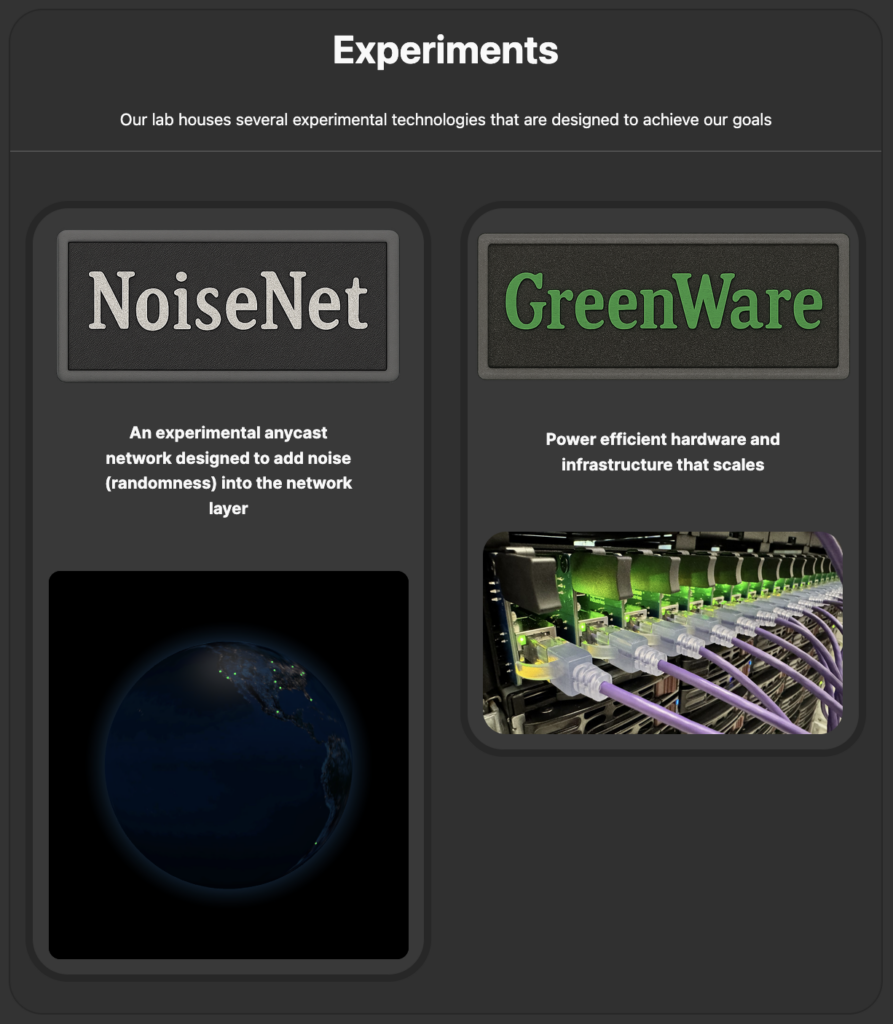
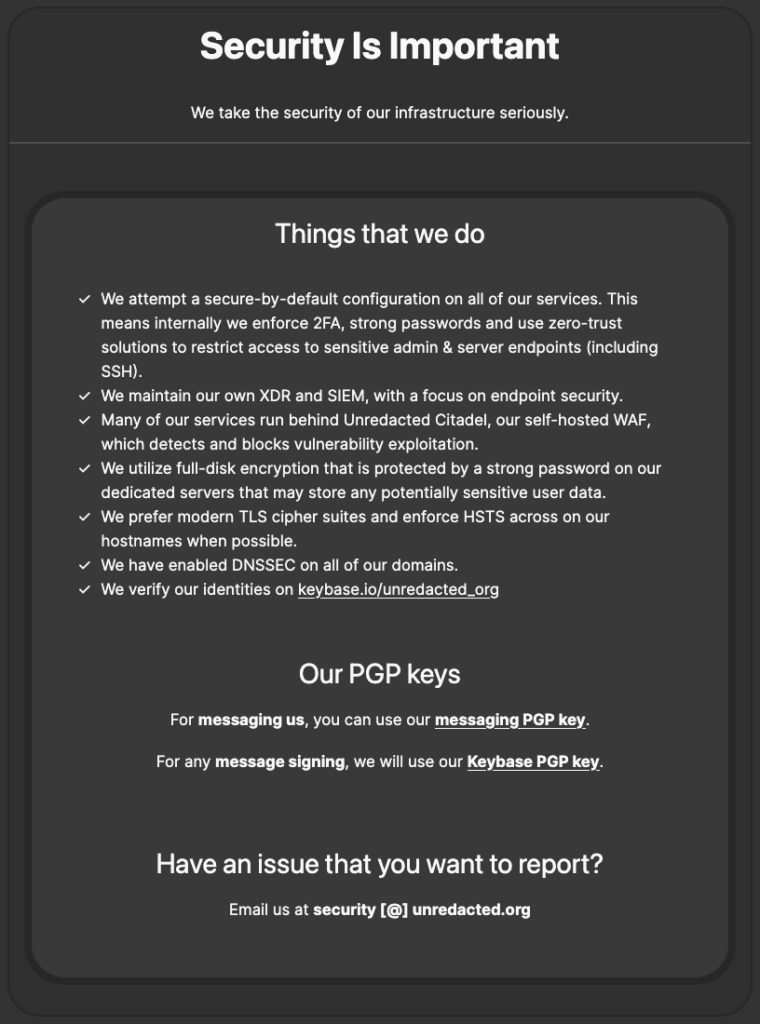
Want to read more about the inner-workings our projects & services? Check out our blog!
Infrastructure
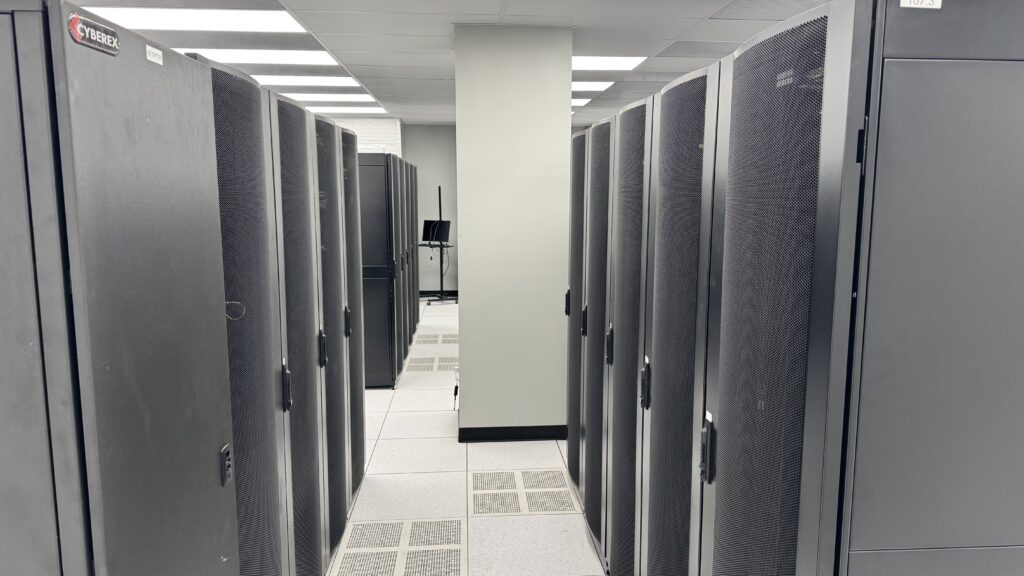
Unredacted’s infrastructure has never been this large and robust. We now have physical presence in 2 datacenters with our fully owned hardware. Combined with our global infrastructure, we have over 200 servers & VMs in operation today!
At the moment, our core datacenter houses our most critical internal and public infrastructure. This includes our Secure Infrastructure (SI) services, which have fully redundant power, network, compute, and storage. We operate 2 fully HA Ceph clusters to ensure that our services remain up and performant. We now also have local and offsite backups in case of a disaster.
Some of our cluster specs:
- Compute: 5x dual CPU servers, each with 384GB of RAM and pure SSD storage (fully expandable)
- Storage: 3x dual CPU servers, each with 192GB of RAM and 36x HDDs with 360TB of raw storage (fully expandable)
You can even see our infra for yourself on our new 24/7 Twitch live stream from our datacenter!
Click to the logo to view the stream

Or watch the blinky lights in this clip
We worked countless hours building out our infrastructure. Take a look at some of our builds below.
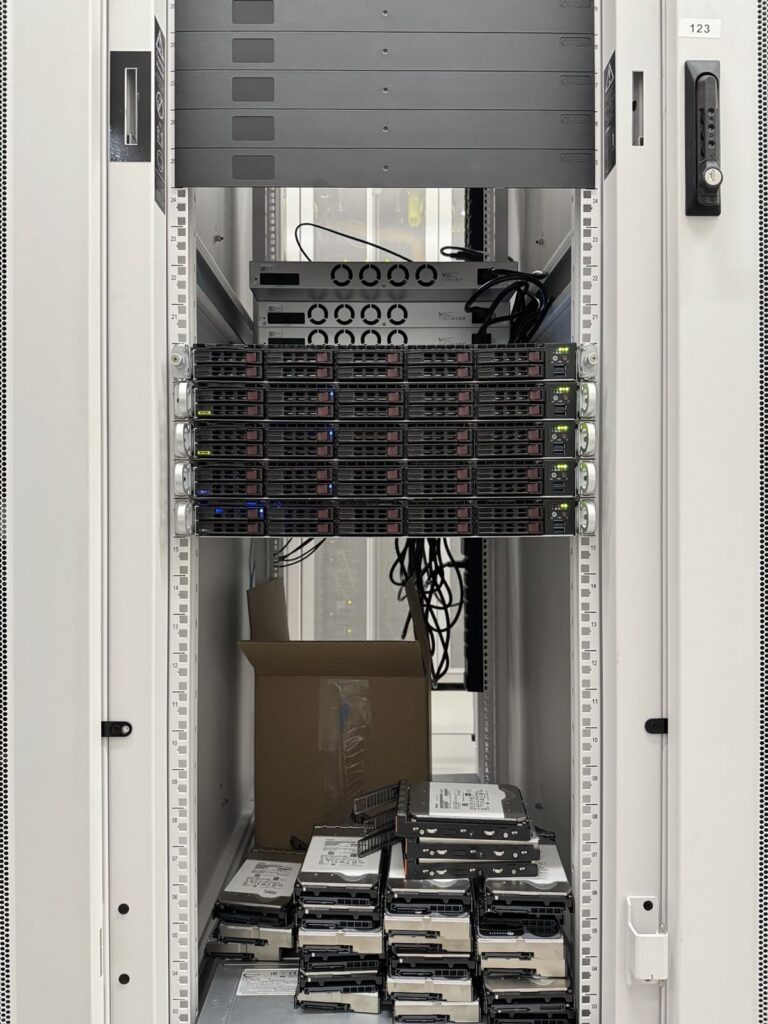
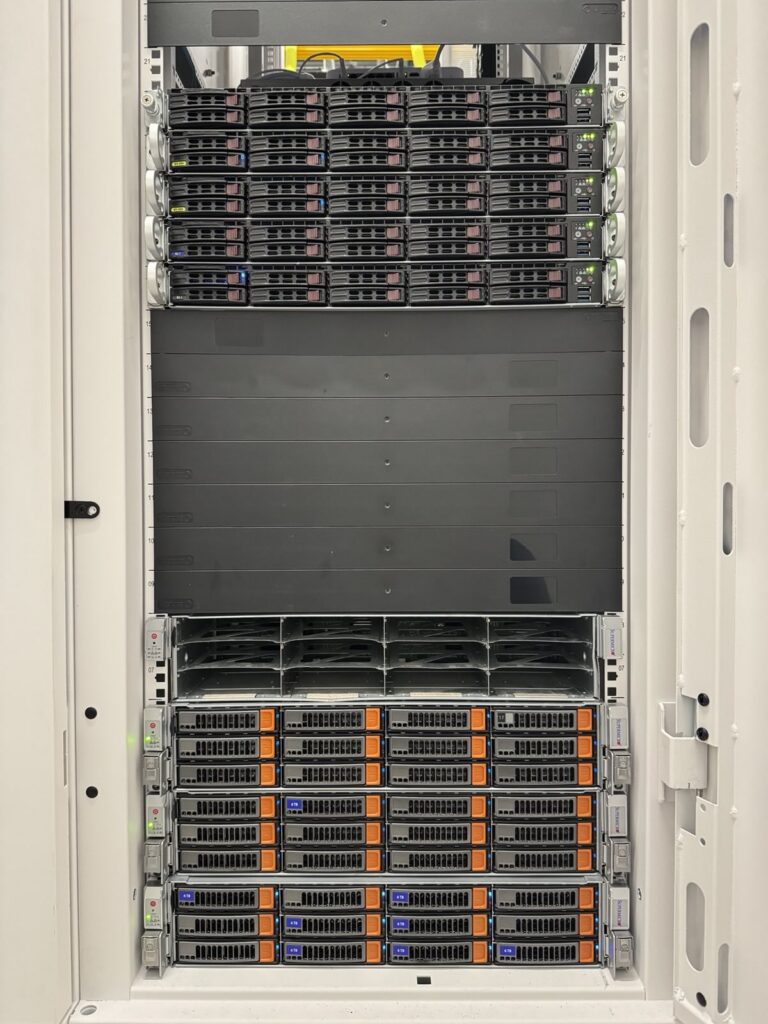
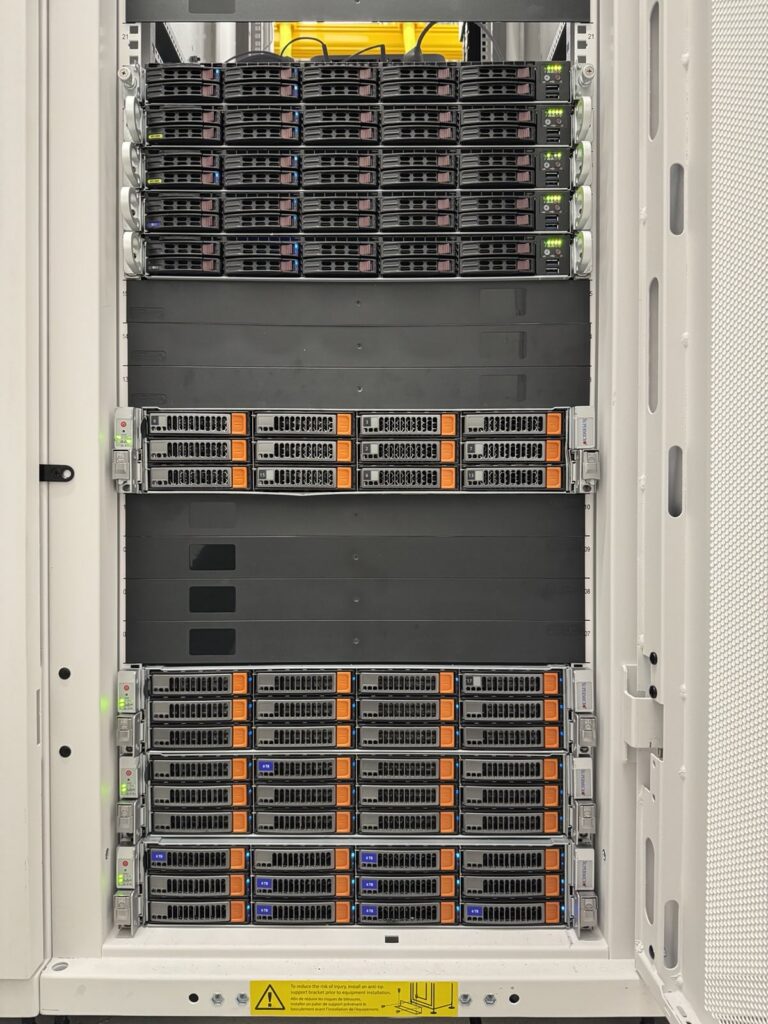
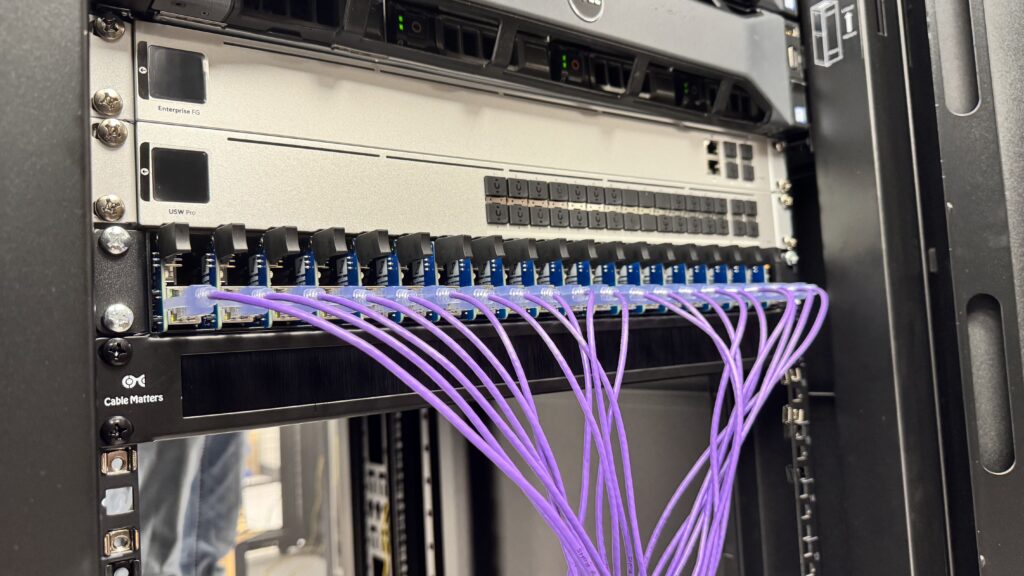
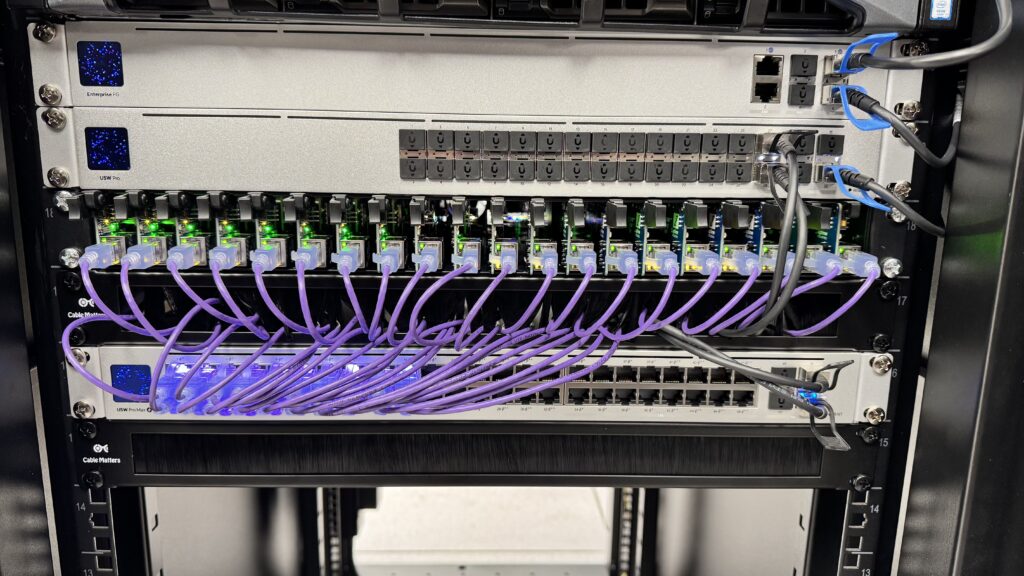
Curious about those purple cables and that hardware? Read more about GreenWare on our blog.
Network
One of our most ambitious projects of 2025 was NoiseNet (AS401401). Launched under Unredacted Labs, NoiseNet is an experimental anycast network spanning the globe. It is designed to make it more difficult for censors to perform traffic correlation attacks against parts of our network. If a threat actor were to breach our network, or our upstreams, our goal is to make their their task much more difficult. NoiseNet adds a layer of ‘noise’ via asymmetrical traffic flows, encrypted tunnels, and the sometimes unpredictable nature of anycast. In 2026, we will further develop software that will run on our machines to delay packets and transmit cover traffic, adding even more noise.
Currently NoiseNet consists of 70+ edge routers and we’re continually working to expand it. NoiseNet remains experimental for the time being, and there is much work to be done to improve its resiliency such as automatic packet loss and high latency remediation.
See how it works below, and read our blog post for the full and nitty-gritty details on how it works.

This year, we also moved our core network to AS401720, separating NoiseNet and our core.
Security Initiative
As we operate services and infrastructure that processes potential Personally Identifiable Information (PII), security becomes important. We’ve maintained a security page, outlining some of the things that we do to secure our infrastructure from attack. We’re concerned with things like malware, vulnerability exploitation, and unnecessarily exposing information that threat actors could use to compromise us.
As such, in 2025 we deployed several services to help us secure our infrastructure.
- Unredacted Citadel – a self-hosted WAF which protects against vulnerabilities in our web applications, injects additional HTTP security headers, and can be used to defend against DDoS attacks.
- Our own XDR + SIEM solution – deployed on every server we maintain to gather potential Indicators of compromise (IoCs), and to help generally defend against and alert us of attacks.
- Unredacted Funnel – a self-hosted Tailscale/Headscale mesh network which allows us to securely SSH into our infrastructure, and transfer data between servers via encrypted WireGuard tunnels.
- Unredacted Auth – our internal SSO solution, allowing us to securely access internal infra.
Into 2026, we’ll continue improving our security.
Unredacted Door
In July of 2023, we started Operation Envoy, an initiative that consists of ‘envoys’ which help to deliver messages (packets) to and from the Tor network. Over the years, we’ve expanded it to include all of our services that help people get through the front door, and onto the free and open Internet.
Today we’re rebranding Operation Envoy into Unredacted Door. It’s no longer an operation, but a suite of services that help people around the world bypass Internet censorship.
Unredacted Door includes:
- FreeSocks (currently uses Outline, which is based on Shadowsocks)
- Unredacted Proxies (uses Signal’s TLS proxy & Telegram’s MTProto proxy)
- Unredacted Tor bridges & snowflake proxies (using WebTunnel, meek or snowflake)
Around the same time last year, we had served around 192TiB of traffic in a single 30 day period. As of December of 2025, in the last 30 days we’ve served over 291TiB of traffic to across all Unredacted Door services, which is a substantial increase. Year over year, we have achieved an increase in total bandwidth usage across our censorship evasion services. This means we’re helping more people every year, and we’ll continue to do so.
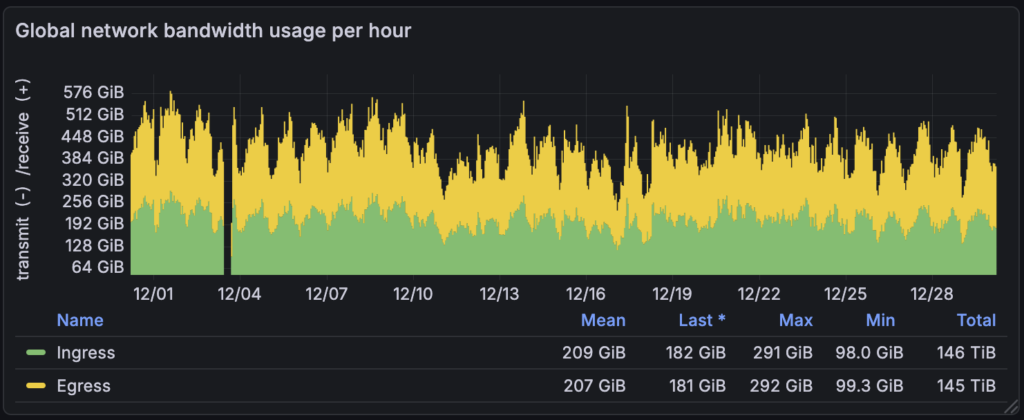
If we continue to average at this new rate of bandwidth over a year, that would be nearly 3.5PiB!
Last year, we ended with 91 CPU cores and 90GiB of RAM. After consolidating, seeking better deals, and reviewing the current CPU core and RAM counts, we ended the year with 81 cores and 90GiB of RAM across all Unredacted Door services. Lower core count, but more bandwidth usage overall. In 2026 we’ll see a rapid expansion of our censorship evasion infrastructure, and we expect these numbers to go much higher.
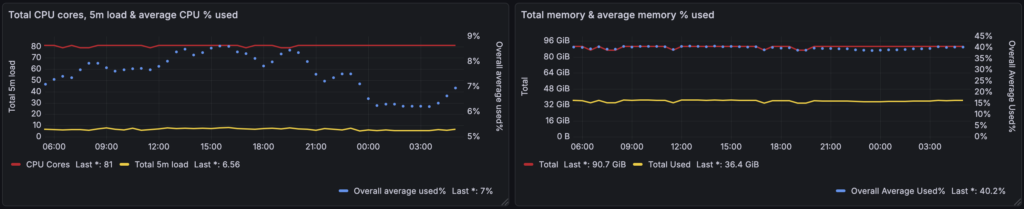
Our anonymized & aggregated Unredacted Door metrics are publicly accessible, and you can see the direct impact that we’re making.
In 2025, we will continue expanding our CPU core and RAM counts, but we can’t do it without your help! If you like what we do and want to support our mission, consider making a donation.
FreeSocks, proxies that circumvent censorship
FreeSocks is our service that provides free, open & uncensored Outline (Shadowsocks) proxies to people in countries experiencing a high level of Internet censorship.
Since its inception, FreeSocks has issued over 46,000 access keys to people looking to circumvent Internet censorship. We’re proud to have helped so many people all over the world access the free and open Internet.

Although delayed for quite some time, in 2026, we’ll be continuing our work on a full rewrite of the freesocks-control-plane (FCP), the code which powers FreeSocks and allows for access keys to be issued and have their state tracked. The rewrite will convert the existing code from JavaScript to TypeScript, and feature an API + web control panel which will allow us and others to manage their FCP deployment more easily.
We’ve also been hard at work improving our automation stack for FreeSocks called ansible-role-freesocks (ARF), which helps us automate the deployment of new FreeSocks servers. ARF will continue to be improved going into 2026, becoming more robust and flexible. It also lays the foundation for our new and improved FreeSocks v2, launching in 2026.
FreeSocks v2 (as seen in the diagram below) will utilize Outline’s Shadowsocks over WebSockets (SS over WSS) feature and dynamic access keys by default. Instead of raw Outline Shadowsocks, which is easily detectable and blocked by advanced DPI systems, SS over WSS encapsulates the Shadowsocks connection inside a WebSockets connection. This disguises it to censors, and makes it look like a normal connection made to websites by regular Internet users.
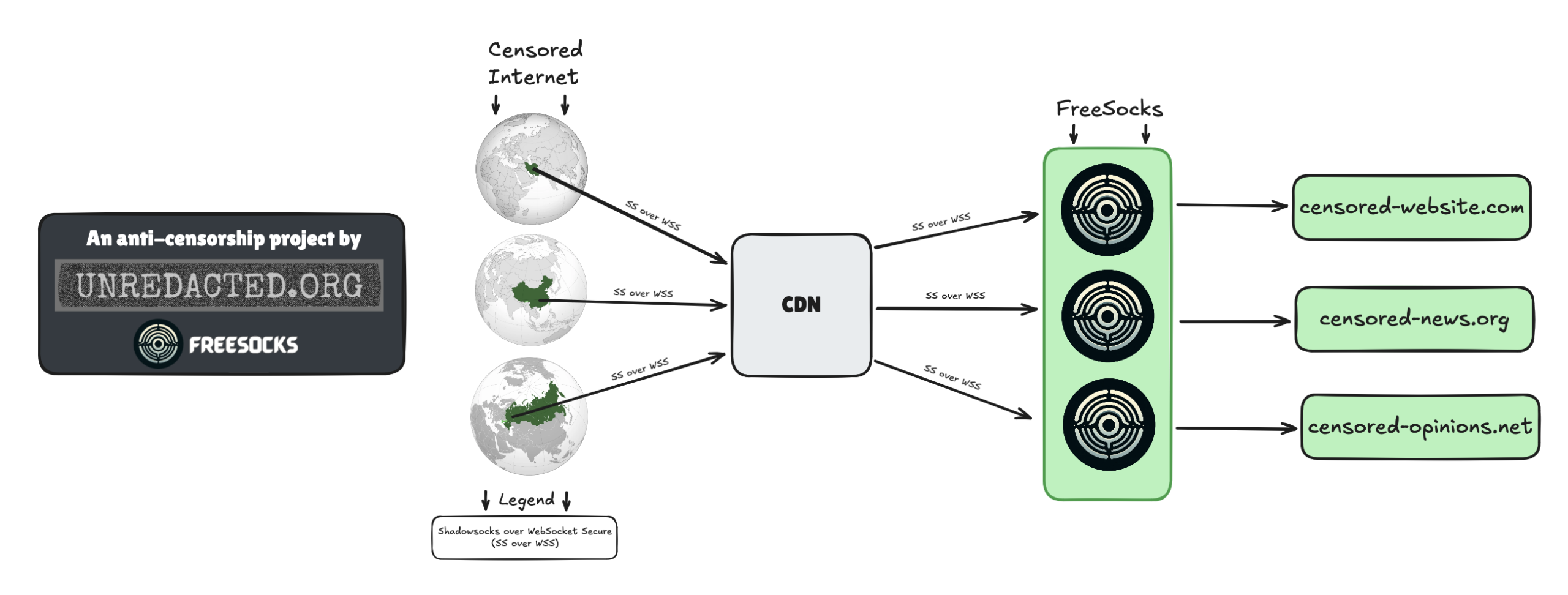
This makes FreeSocks much more resilient, additionally allowing us to front connections through any CDN or proxy that supports WebSockets. If blocked, we can easily rotate IPs or hostnames to get our users back online through our ARF automation, and update all dynamic access keys on the fly. All without our users having to do anything at all.
A major hurdle for us is not having current support in outline-server for SS over WSS or dynamic access key issuance via the shadowbox API. We’ve been working on adding support for it in our fork of outline-server, and preliminary testing is looking great, with many users successfully testing in Iran, Russia and China.
We intend to get our code merged upstream in 2026. Keep an eye on these GitHub threads.
- Add Shadowsocks over WebSocket (SS over WSS) Support #1676
- WebSocket Support (SS over WSS) and OutlineCaddy Integration #1685
->-> We can’t operate services like this without your help <-<-
Unredacted Tor Exit Relays

In our efforts to help people evade censorship, and protect their right to privacy, we have operated numerous high-bandwidth Tor exit relays since 2021.
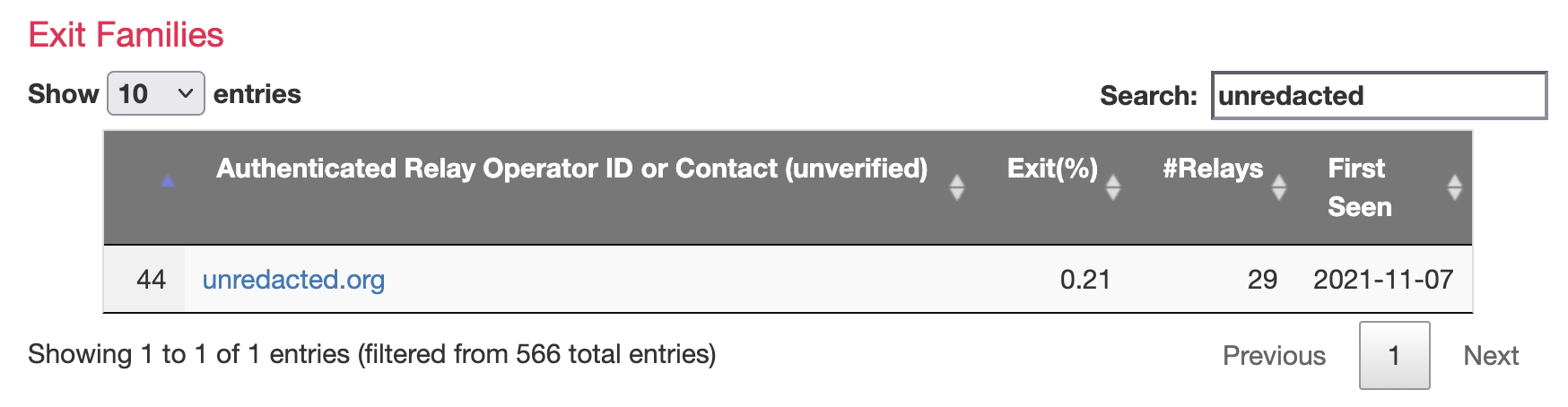
We’re currently #44 in the top exit families as of 2025’s end, and have a 0.21% exit probability according to OrNetStats. That means your connection through Tor may be one of the 0.21% which exits traffic through our relays.
Currently, we have around 30Gb/s of capacity across our network (a drastic increase from previous years). However, due to complications with our anycast network, performance has taken a hit. As we expand NoiseNet and improve its resilience, we expect our bandwidth usage and overall throughput to increase. In 2026, we also plan to considerably expand our number of Tor exit relays from 30 to 90 or more.
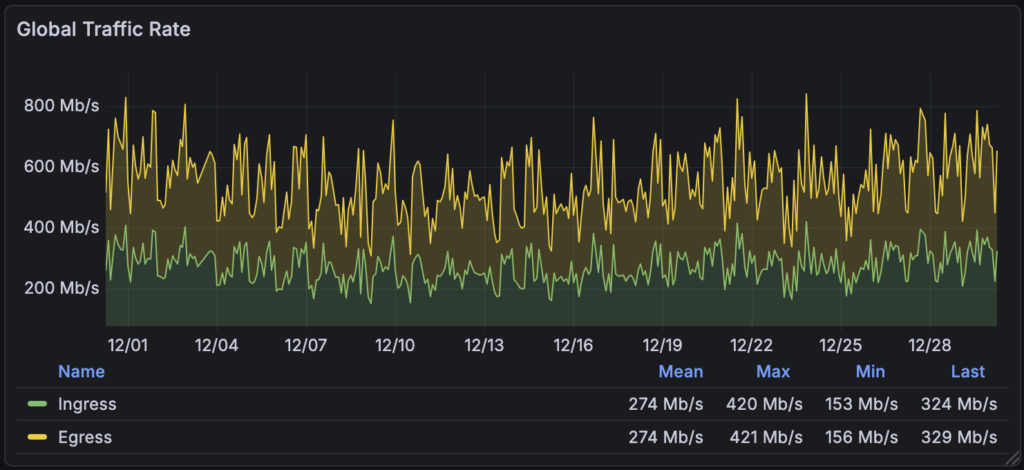
Over the past 30 days we have received and transmitted over 162TiB of Tor traffic. If this rate continued for a year, that would still be nearly 2PiB of bandwidth usage for a whole year. Combined with our Unredacted Door services, that would be nearly 5.5PiB in total. That’s still excluding all of our other services. For comparison, Signal pushes around 20PB a year on their call relays, despite being much larger than us.

With your help, we can do even more, and continue to push more traffic on the Tor network.
Chat services
Our oldest service XMPP.is hit its 10th birthday this year. It continues to be a reliable service, and has nearly 70,000 registered users.
We’ve also spent many hours improving our Matrix homeserver:
- Migrated its media storage to on-prem S3 storage using Ceph’s Rados GW.
- Increased the resources available to it (32 cores and 256GB of RAM).
- Various database maintenance events, settings tweaks.
- Countless hours of moderation efforts, described in our blog post.
Our Matrix homeserver now has nearly 30,000 users registered, and continues to grow!
If you want to chat with us and other like-minded people, why not join one of our communities?
Mastodon instance, and other services

Last year we quietly launched our own privacy-focused Mastodon instance. It has been in testing for a long while, but it’s now considered stable, and actively monitored. It runs on the same powerful infrastructure that the rest of our core services operate on top of.
Head on over to unredacted.social if you’d like to sign up, and join our growing community.
We’ve also launched several other services, such as the ones below. All of which are behind our Citadel WAF.
- board.unredacted.org – An Excalidraw instance where you can sketch or whiteboard, privately or collaboratively
- share.unredacted.org – A service which allows you to share end-to-end encrypted notes and files for a short period of time
- paste.unredacted.org – A PrivateBin instance for E2EE notes
- ntfy.unredacted.org – A simple HTTP-based pub-sub notification service
In 2026, we’re planning on introducing even more services, including a Delta Chat relay! We’ll be updating our website, social media, and community chats when we’re sure they’re up to our standards of stability, so stay tuned for announcements!
Funding
We expect to publish an IRS form 990 detailing all of our financials in 2026. This will allow anyone to transparently view how much revenue we bring in, how much we spend, and on what we spend our money. When the time comes, our transparency page will be updated.
We expect that with our current expense and growth rate, the current funds we have will allow us to operate for 1-2 years. To continue our mission, and rapidly expand, we’ll need your support! We will continue our fight against Internet censorship and privacy in 2026.
If you want to support us, we allow one-time or recurring donations via multiple payment methods, including PayPal, credit cards, cryptocurrency (including XMR & ZEC), Open Collective, Patreon & Liberapay.

Looking forward to 2026, we have a lot of ambitious goals for Unredacted we can’t wait to share with you! A redesigned Freesocks, new services such as Delta Chat, considerably expanding our Tor exit relay network, fine-tuning our ambitious NoiseNet project, and launching Unredacted merch are just a few of our biggest goals for 2026. We’re so excited to continue developing services that give privacy and knowledge back to the people who would otherwise face censorship or surveillance. We want to thank you all so much for being here with us on our journey and for the donations and support our community gives us. If you believe in our mission and projects, please consider making a donation so we can expand our services and reach to even more people around the globe. Let’s make 2026 the year we all Unredact the Internet!